
Grace Notes
Volume 8 | March 2026
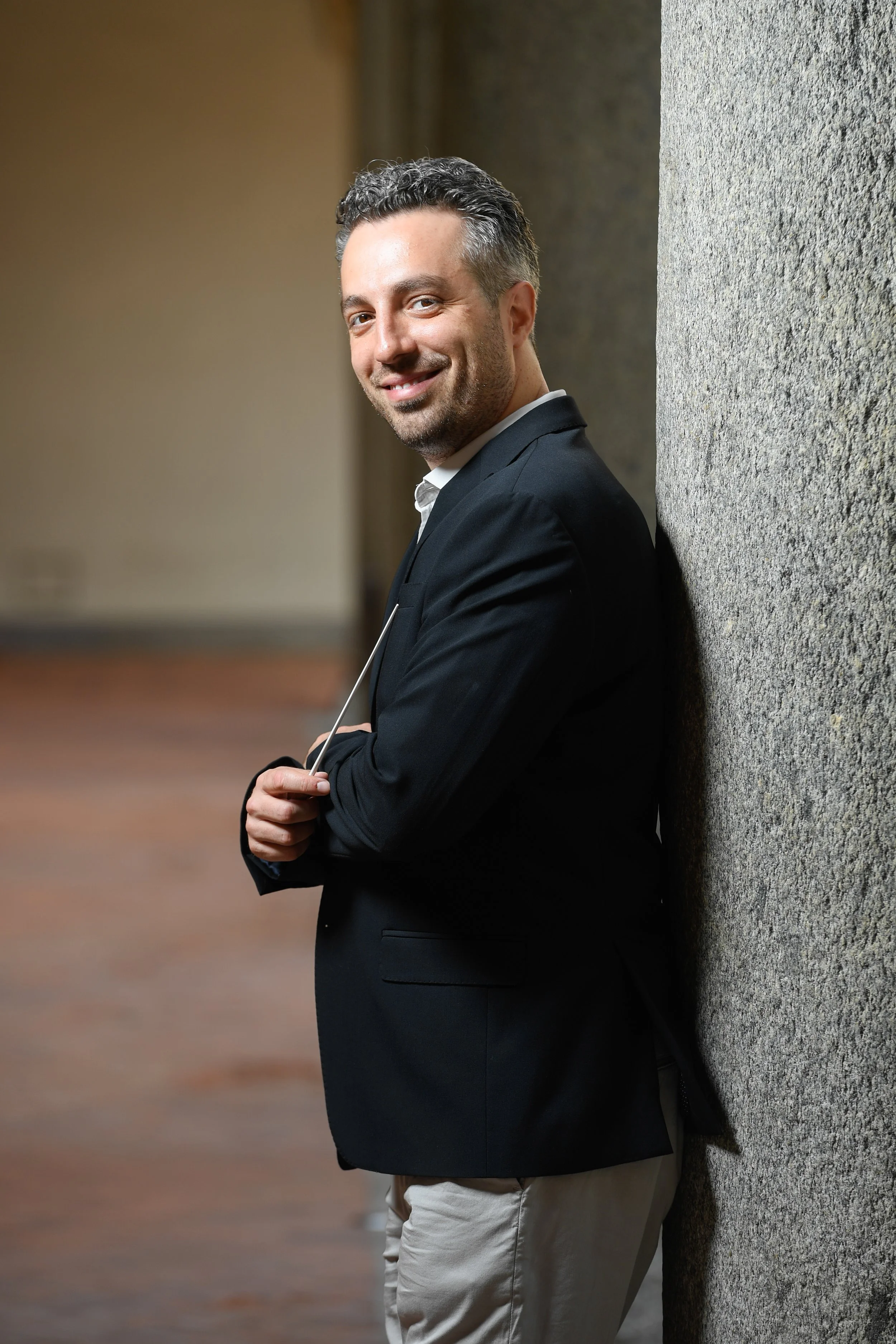
Artistic Director Filippo Ciabatti
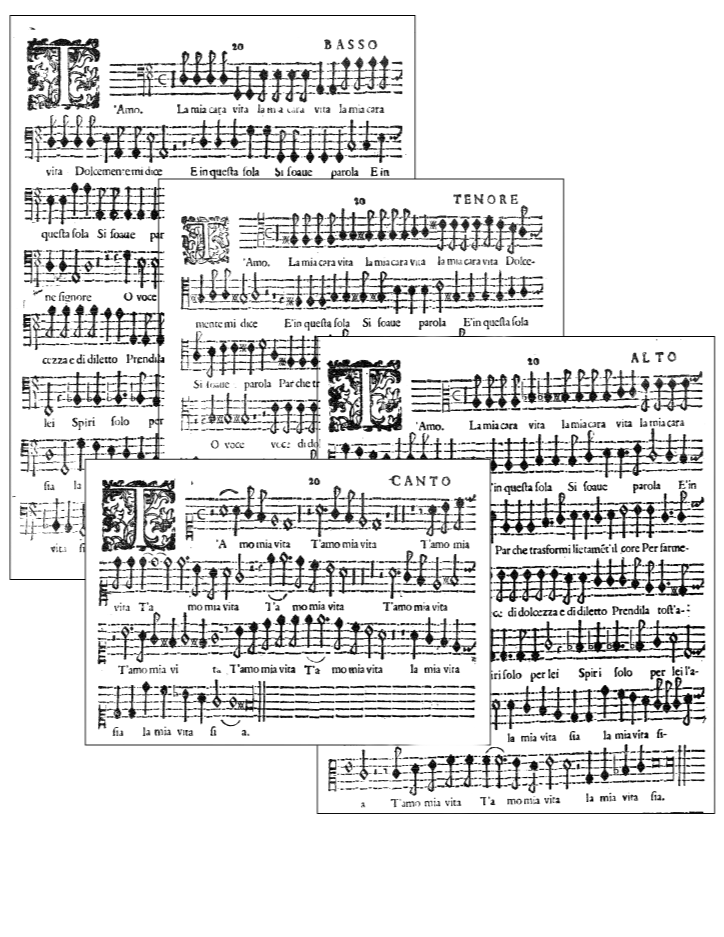
Manuscript of Claudio Monteverdi’s madrigal, T’amo, mia vita
INTERVIEW
Filippo Ciabatti
on UVB’s March and April Programs
DONNA GRANT REILLY
Along with Bach’s Easter Oratorio, the other work featured on the program coming up in March will be Bach’s Magnificat. Tell us something about it, Filippo.
Sure. The Magnificat is one of the great pieces Bach wrote during his tenure in Leipzig. And, as you know, it’s written in Latin, as was the B Minor Mass. It’s a Marian text—of the Virgin Mary—and it contains eleven movements. It has all the great features of a Bach masterwork: choruses, arias, and duets; and, musically, it’s extremely technical and difficult to perform. It is sparkling and moving, as everything written by Bach always is.
Will there be anything different about the way you perform the Magnificat?
Well, it’s been done many times, but I try and bring my own sensitivity and my own mindset to the work. I think that brings a fresh perspective, and it’s the way I try to approach every piece of music.
I sang the Magnificat in college, eons ago, and I recall there being a prominent part for solo trumpet.
Oh, yes. Very, very difficult. It’s considered one of the most difficult pieces to play for a Baroque trumpet, but we will have a virtuoso musician playing it in March.
We also have a program of Italian madrigals to look forward to in April, and I see you have a role as conductor. Isn’t that unusual?
I won’t be conducting them in the traditional way, but I’m certainly going to have a hand in putting them together. It’s not unusual to have someone making musical decisions about madrigals. And it’s going to be an all-Italian program, which I’ve wanted very much for a long time because of the language, the music, the repertoire, and the way they all fit together. The program will be an intimate one, with five singers accompanied by a theorbo, by composers such as Monteverdi and Marenzio. It explores music at its most direct and expressive, with sound and text that are inseparable. In Italian, this approach was called, the Teoria degli affetti, (the theory of the affections)—the idea that music serves the text by giving voice to human emotions and illuminating the meaning of every word. I think it will be of great interest to everyone.
It appears that we have two more wonderful programs in store for us this season. Let’s hope there will be no more snowstorms.
Yes, that is definitely something we don’t want!
Table of Contents
INTERVIEW
Filippo Ciabatti on UVB’s March and April Programs
MUSICIAN PROFILE
Paul Max Tipton, bass-baritone
PRE-CONCERT VIRTUAL PRESENTATION
Madrigals in Renaissance Italy
MUSICAL TERM
Italian Madrigal
INSTRUMENT
Oboe d’Amore
LOOKING BACK
Vivaldi’s The Four Seasons
What do you think?
We want Grace Notes to bring you interesting and educational pieces that help connect you to our work. Let us know what you want to see in this publication by emailing baroqueuv@gmail.com.
CREDITS
Donna Grant Reilly,
Editor-in-Chief
Jo Shute,
Contributing Editor
Mary Gerbi,
Contributing Editor
Catherine Hedberg, Design